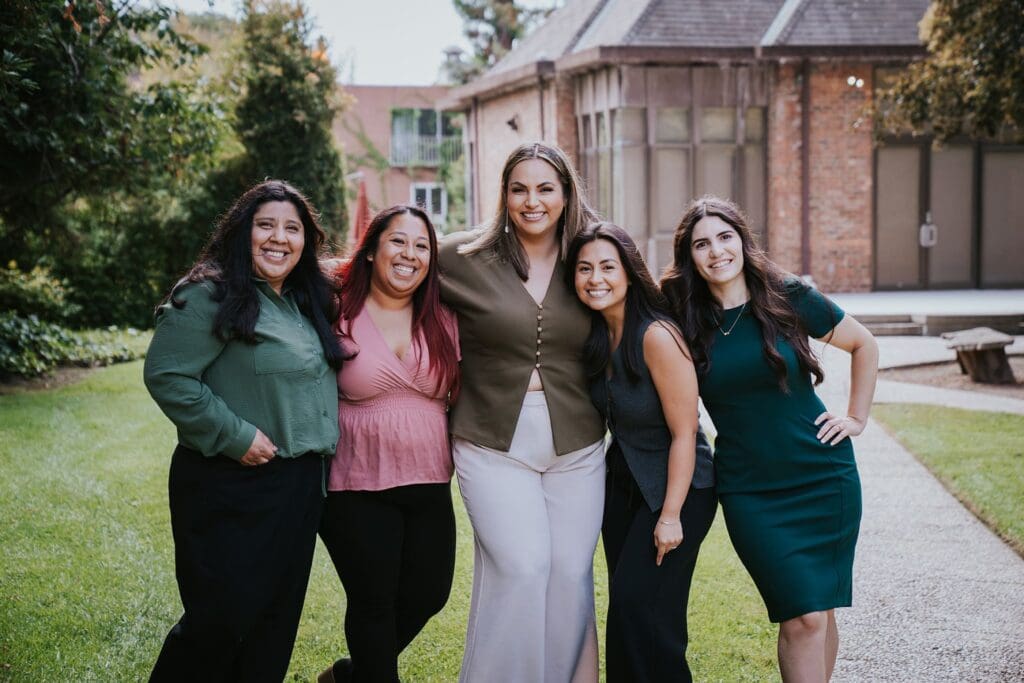
Está en el lugar correcto si está pensando en buscar ayuda, desea entender sus opciones o simplemente quiere saber más sobre cómo es trabajar con nosotros. A continuación, le ofrecemos un breve resumen de lo que puede esperar al comenzar su camino con Stouffer Law.
Back-to-School in a Mixed-Status Family: Protecting Your Rights
For most families, the back-to-school season is simply busy. For a mixed-status family, where a child might be a U.S. citizen, a green card holder, or undocumented, and where parents may hold different statuses from each other or from their children, that same season can carry a heavy question: is my child safe here?
We want to answer that question as clearly and honestly as we can. The short answer is this: your child’s right to attend public school does not depend on immigration status, and that has not changed. What has changed is the environment around schools, and that is worth understanding so you can walk into this school year prepared rather than afraid.
The right that has not changed: every child belongs in the classroom
In 1982, the U.S. Supreme Court decided Plyler v. Doe, holding that a child’s access to a free public K-12 education cannot depend on immigration status. The Court found that denying children an education imposes a lasting harm that no state interest could justify, and that ruling still stands today.
In practice, that means public schools cannot deny enrollment, treat a student differently, or ask a family to prove immigration status as a condition of attending. Legal advocates note that Plyler also bars indirect attempts to discourage enrollment, things like requiring a Social Security number, collecting status information that is not otherwise needed, or making families feel that showing up will expose them. A school can ask for proof of age, residency, and immunization records. It cannot ask what your family’s immigration status is, and you are not required to answer if it does.
This is one of the most stable, well-established protections in immigration-adjacent law. Whatever else is shifting around schools right now, this part is not.
What has changed: schools are no longer automatically off-limits
For decades, federal policy treated schools, along with places of worship and hospitals, as “sensitive locations” that immigration agents were expected to avoid except in narrow, urgent circumstances. That changed in early 2025, when the policy was rescinded at the federal level.
The practical effect is that immigration enforcement is no longer categorically restricted from school grounds the way it once was, and there has since been a wave of litigation, state-level pushback, and school-district policy responses working through exactly what that means in practice. Some states and districts have adopted their own rules limiting what immigration agents can do on school property. Others have not. This is still being worked out in courts and statehouses, which is part of why the uncertainty feels so unsettling.
Here is what stays true regardless of how that plays out: your family’s constitutional protections do not disappear because the policy landscape shifted. But they do require you to know them.
The crucial importance of seeing the right kind of warrant
If immigration agents come to a school, the single most important legal distinction is the type of warrant they’re carrying. Only a judicial warrant, one signed by a judge, based on probable cause, naming the specific person and location, can require a school to allow agents into non-public areas or to hand over student records. An administrative warrant, which immigration agents use far more often, does not carry that authority. It does not compel a school to open a classroom door or release a child.
Ask any adult responsible for your child during the school day, an administrator, a front office staff member, to know the difference and to ask for the specific document before anything else happens. You have the right to ask questions before you consent to anything, and so does your child’s school.
If you hear there is enforcement activity near a school
Rumors travel fast, especially in group chats and on social media, but they are not always accurate. If you hear that immigration enforcement is happening near your child’s school, the most reliable first step is to call the school directly and ask what they know. Schools that have prepared for this moment generally have a plan for communicating with families quickly and directly (through a call, a text alert, or an email) rather than through word of mouth.
If your child is at school when something happens nearby, in most cases the safest place for them is exactly where they are: in the building, with the adults responsible for their care. Talk with your child ahead of time about that, so it is not a confusing instruction in a stressful moment. And if you are ever told your child cannot be released to you or your designated caregiver, or that records are being requested, that is the moment to call us before agreeing to anything.
TIP: To report and/or verify ICE activity for the sake of keeping the community safe and avoiding panic and unfounded rumors, you can find numbers to California rapid response hotlines on the California Rapid Response Networks’ website,
Your child’s records are protected, too
The Family Educational Rights and Privacy Act protects the privacy of student records, including enrollment information, at every public school. A school generally cannot hand over your child’s records to immigration authorities without your consent or a valid judicial order; a routine request or an administrative warrant is not enough on its own. If you are ever unsure whether something being asked of your child’s school is appropriate, that is another good moment to call us rather than guess.
The importance of having a family plan
The most steadying thing you can do this month is a short, practical conversation, held once, calmly, before you need it, where you:
- Update your emergency contacts. Make sure your child’s school has a current list of the adults who are authorized to pick your child up, and that those adults know they’re on the list.
- Choose a trusted caregiver. Talk with someone you trust, ideally someone with stable status, about stepping in if you’re ever unavailable. Formal options for authorizing another adult to make school and medical decisions for your child vary by state, and range from a simple written authorization to a court-recognized guardianship. We can walk you through what is available where you live.
- Write down what matters. A short document with emergency numbers, your child’s medical needs, and where important papers are kept saves precious time in a moment of stress.
- Talk to your child, gently. Age-appropriate honesty, who will pick them up, who to call, that they are safe, reduces fear far more than silence does.
You can find a thorough step-by-step family preparedness plan, in both English and Spanish, on the Immigrant Legal Resource Center’s website.
None of this means something is going to happen. It means that if something unexpected ever does, your family is not figuring it out for the first time in a moment of panic.
You do not have to carry this alone
We know this is a lot to hold alongside first-day photos and school supply lists. That is exactly why we are here, and why we do what we do. Whether you want help putting a family plan in place, have questions about your child’s rights at school, or simply want to talk through what this year might look like for your family, we will walk through it with you clearly, calmly, and without judgment.
You have already done the hard work of building a life for your family here. Understanding your rights, and putting a simple plan in place, is one more way of protecting what you’ve built.
| Protect Your Family This School Year
A short conversation now can bring real clarity before the year gets busy. Let’s talk through what a family plan could look like for you. Protect your family, book a consultation → https://stoufferlaw.com/contact/. |
Together, every step, on the path to your future.
Juntos, en cada paso, construyendo tu futuro.
Disclaimer: This article is general information, not legal advice for your specific situation, and naturalization rules can change. A short conversation is usually all it takes to know where you stand.
Acreditaciones





Contáctenos hoy.
"*" indicates required fields