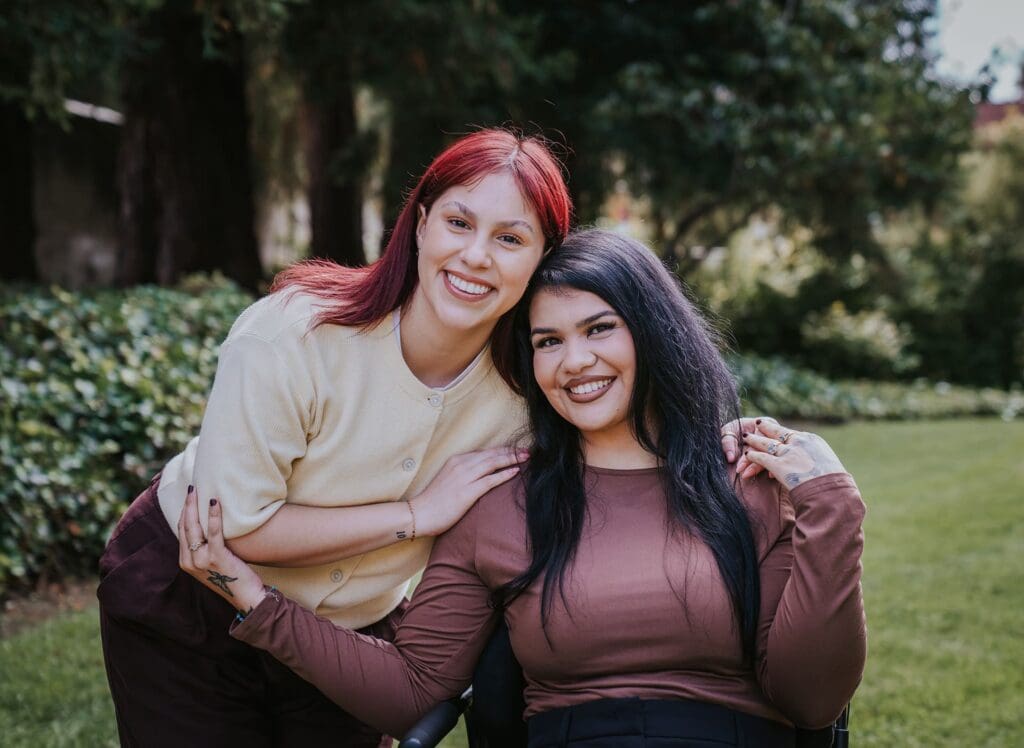
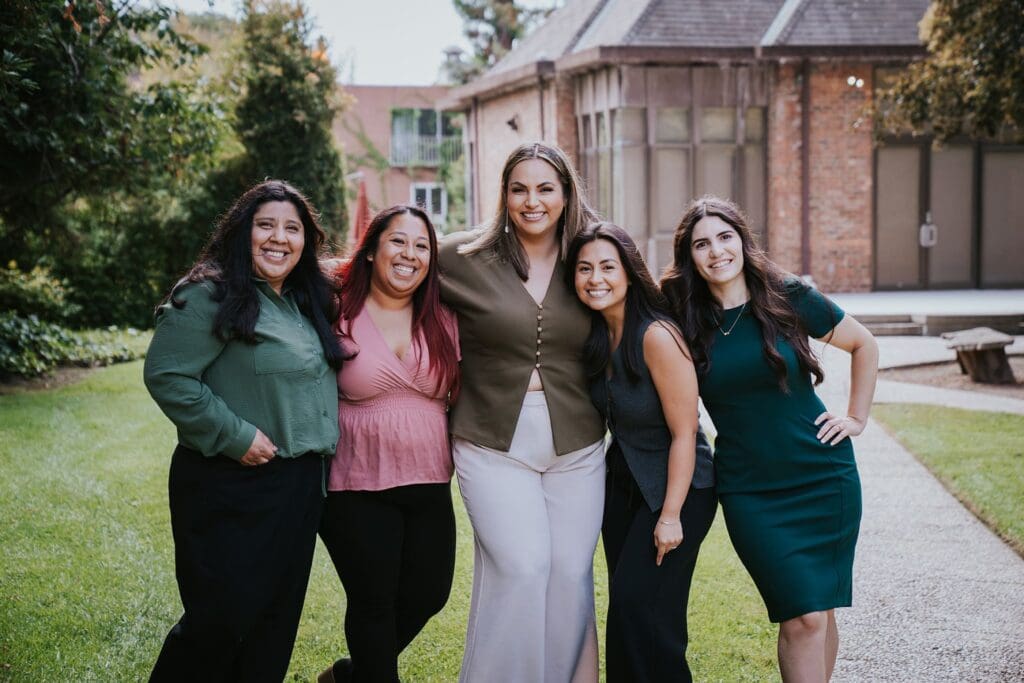
Está en el lugar correcto si está pensando en buscar ayuda, desea entender sus opciones o simplemente quiere saber más sobre cómo es trabajar con nosotros. A continuación, le ofrecemos un breve resumen de lo que puede esperar al comenzar su camino con Stouffer Law.
VAWA Self-Petition: What Survivors Should Know in 2026
Immigration status can become a tool of control in an abusive relationship. A spouse may threaten to withdraw a petition, refuse to file one, hide immigration documents, or insist that leaving the relationship will lead to deportation.
Federal law provides a way for some survivors to pursue immigration status without depending on the abusive relative. The process is commonly called a VAWA self-petition and is filed on Form I-360.
If you are in immediate danger: Immigration planning is separate from immediate safety. The National Domestic Violence Hotline is available at 800-799-SAFE (7233), by text at START to 88788, and through TheHotline.org. If your internet use may be monitored, consider using a safer device or calling instead.
A law firm’s consultation is not a crisis service. Use emergency or advocacy resources when immediate safety is the concern.
Quick answer: A VAWA self-petition can allow certain abused spouses, children, or parents of U.S. citizens or lawful permanent residents to file for immigrant classification without the abusive relative’s knowledge or consent. Despite the name of the law, VAWA self-petitioning is not limited to women.
USCIS substantially revised its VAWA Policy Manual guidance on December 22, 2025. Current filings should be prepared against the current rules, not older summaries that still describe the pre-2025 policy.
In this guide:
What is a VAWA self-petition?
The Violence Against Women Act allows certain noncitizens who have been subjected to battery or extreme cruelty by a qualifying U.S. citizen or lawful permanent resident family member to file a petition on their own behalf.
The petition is filed on Form I-360. The abusive relative does not have to sign the petition, sponsor the survivor, or agree to the filing.
This protection applies regardless of gender. The legal question is whether the relationship and the abuse fit the statutory requirements.
Who can file a VAWA self-petition?
Eligibility depends on the qualifying family relationship. Depending on the circumstances, VAWA self-petitioning can be available to:
- A spouse or former spouse of an abusive U.S. citizen or lawful permanent resident;
- A child of an abusive U.S. citizen or lawful permanent resident;
- A parent of an abusive U.S. citizen son or daughter who is at least 21 years old; and
- In certain circumstances, a parent filing because the parent’s child was subjected to battery or extreme cruelty by the qualifying spouse.
Former spouses can still have a filing path in some situations, but strict relationship and timing rules apply. Do not assume that divorce automatically ends eligibility, and do not assume that every post-divorce filing remains timely.
USCIS provides current eligibility information in its Green Card for VAWA Self-Petitioner guidance.
What does a VAWA self-petitioner have to prove?
The exact requirements vary with the relationship, but a typical spouse-based self-petition can involve proof of a qualifying relationship, a good-faith marriage, battery or extreme cruelty, the abusive relative’s qualifying immigration status, shared residence, and good moral character.
USCIS applies a preponderance-of-the-evidence standard. In plain English, the evidence must show that the required fact is more likely true than not.
One point is easy to misunderstand: VAWA permits «any credible evidence» relevant to the petition, but that does not mean every piece of evidence receives the same weight. USCIS decides credibility and evidentiary weight under the statute and its current Policy Manual.
What changed in USCIS VAWA guidance in December 2025?
On December 22, 2025, USCIS issued updated VAWA policy guidance that applies to pending and newly filed self-petitions. The changes matter because many older online explanations describe rules USCIS no longer follows.
Shared residence must occur during the qualifying relationship
USCIS reverted to its pre-2022 interpretation of the shared-residence requirement. Under the current Policy Manual, a self-petitioner must have resided with the abuser at some point before filing or reside with the abuser when filing, and the shared residence must have occurred during the qualifying relationship.
There is no required minimum length of shared residence. USCIS also states that simply visiting the other person’s home while maintaining a separate principal residence does not satisfy the requirement. Special rules apply to self-petitioning children.
Good-faith marriage evidence receives more structured review
For spouse-based cases, the marriage must have been entered into in good faith rather than primarily for an immigration benefit. The current policy places greater emphasis on primary evidence of the marital relationship and on whether the complete record is internally consistent.
USCIS clarified how it evaluates battery or extreme cruelty
Battery can be easier to identify than extreme cruelty. Extreme cruelty is a legal standard, not simply a label for a relationship that was unhappy or difficult. Current USCIS guidance should be reviewed carefully when the harm was primarily psychological, coercive, sexual, financial, or immigration-related rather than a single incident of physical violence.
Evidence quality and consistency matter
USCIS continues to accept any credible evidence, but the agency’s current guidance expressly addresses the weight given to evidence. Detailed declarations, records that fit the timeline, and affidavits that explain how the writer knows the facts can be important, especially when other records are unavailable.
Why this update matters: A VAWA packet prepared from an older checklist can miss a current eligibility issue even if the underlying facts have not changed.
The December 2025 policy did not rewrite the VAWA statute. It changed and clarified how USCIS officers are instructed to apply important requirements.
What evidence can support a VAWA self-petition?
Survivors often worry that they do not have a police report, medical record, or other document that looks official enough. VAWA does not require one particular type of evidence for every element.
Depending on what must be proved, useful evidence can include:
- A detailed personal declaration that explains the relationship and events in a clear timeline;
- Marriage, birth, divorce, immigration, or residence records;
- Messages, photographs, financial records, leases, insurance documents, tax records, or school records that fit the relationship history;
- Medical, counseling, shelter, social-service, police, or court records when they exist;
- Statements from people who have first-hand knowledge of relevant facts; and
- Evidence explaining why a document that would normally exist cannot safely or reasonably be obtained.
A case should not be made less truthful in an effort to make the paperwork look tidy. Trauma, separation, financial control, and years of instability can produce gaps. The job is to explain the real record accurately and support it where evidence exists.
How does VAWA confidentiality work?
Federal law gives VAWA, T, and U cases special confidentiality and information-use protections under 8 U.S.C. § 1367. USCIS has also adopted special procedures for protected cases, including safe-address and address-change procedures.
The protections are important, but they are not a reason to be casual about where notices are sent. If mail at home is unsafe, plan the mailing address before filing and follow the special USCIS process for protected cases.
Current address guidance is available on the USCIS change of address page, which identifies separate procedures for VAWA, T, U, and I-751 abuse-waiver cases.
Can a VAWA self-petition lead to a green card?
An approved Form I-360 can provide the immigrant classification needed for a VAWA self-petitioner’s permanent residence case. Whether Form I-485 can be filed at the same time as the I-360 or must wait depends in part on the qualifying relationship and visa availability.
Immediate relatives of U.S. citizens are treated differently from self-petitioners in family-preference categories. Adjustment eligibility also requires a separate review of the person’s immigration history and any applicable grounds of inadmissibility.
For a broader explanation of permanent residence, visit Stouffer Law’s green card and permanent residency practice.
What if U status or T status might also fit?
Abuse, crime victimization, and trafficking can overlap. A person should not assume that one survivor-based filing automatically excludes another.
If the facts involve qualifying criminal activity or trafficking, compare the requirements in U Visa vs. T Visa: Immigration Options for Crime and Trafficking Survivors. Screening several possibilities before filing can be more useful than trying to repair a case after choosing the wrong legal path.
Frequently asked questions about VAWA self-petitions
Does my abusive spouse have to know I filed?
No. VAWA self-petitioning was designed so that a qualifying survivor can file without the abusive family member’s knowledge or consent.
Is VAWA only for women?
No. Eligibility is not limited by gender, gender identity, or sexual orientation.
Can I file after divorce?
Possibly. Former spouses can qualify in certain circumstances, but relationship and timing requirements apply. The divorce date and the reason for the divorce can matter.
Do I need a police report?
Not in every case. VAWA allows relevant credible evidence, and no single document is required to prove every element. The available evidence still has to establish the legal requirements.
Do I have to be living with the abuser when I file?
No. Current USCIS guidance does not require the self-petitioner to still live with the abuser at filing. It does require shared residence that meets the current statutory and policy requirements, including residence during the qualifying relationship.
Can an approved VAWA self-petition lead to permanent residence?
It can provide a basis for permanent residence when the self-petitioner also satisfies the adjustment requirements and an immigrant visa is available when required.
The bottom line
A VAWA self-petition creates a legal route that does not depend on the cooperation of the person causing the harm. That independence is the point of the process.
The December 2025 USCIS update makes careful screening and evidence planning especially important. Older summaries of VAWA eligibility may no longer describe how USCIS is evaluating current cases.
Confidential immigration consultation
If you are trying to understand whether a VAWA self-petition or another survivor-based immigration option may fit your circumstances, Stouffer Law can review the relationship, immigration history, safety concerns, and available evidence with you.
Consultations can be conducted in English or Spanish.
Sources and further reading
- USCIS: Green Card for VAWA Self-Petitioner
- USCIS Policy Manual, Volume 3, Part D, Chapter 2: VAWA Eligibility Requirements and Evidence
- USCIS Policy Alert PA-2025-33: Violence Against Women Act
- National Domestic Violence Hotline: Get Help
Legal disclaimer: This article is provided for general informational purposes only and does not constitute legal advice. Immigration law is fact-specific, and laws, policies, procedures, and enforcement practices can change. Consult a qualified immigration attorney about your individual circumstances.
Acreditaciones


Contáctenos hoy.
"*" señala los campos obligatorios